x
l o a d i n g
logo

Strengthening Women’s voices and agency through land literacy

Women’s Empowerment Through Land Literacy

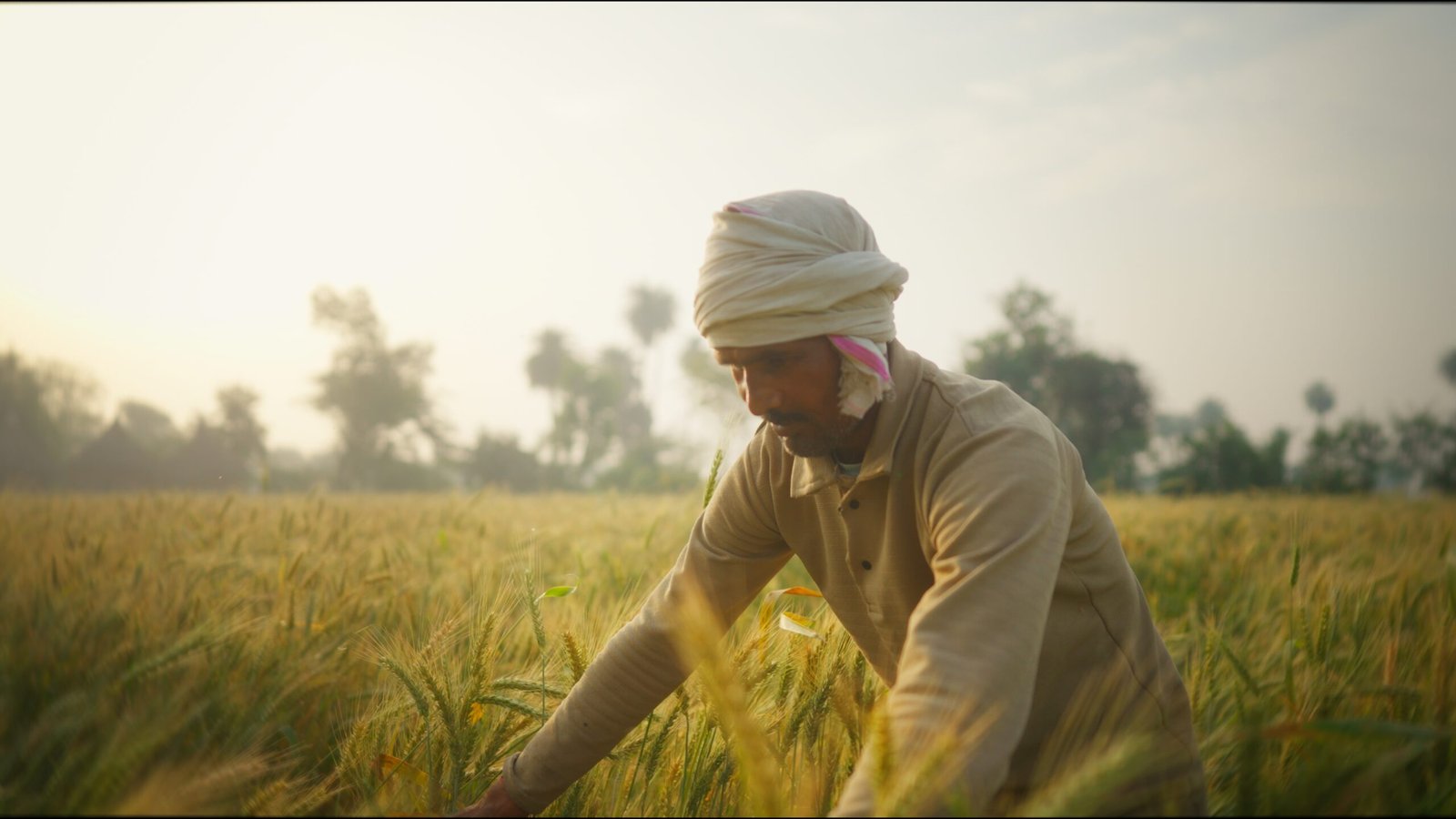
Women’s secure ownership of land and productive resources is disproportionately lower than men even when they form significant contributors as agricultural labour and other work.

Limited access to land rights limits women’s voice, economic security and access to government services, making families more vulnerable to poverty and climate risks.

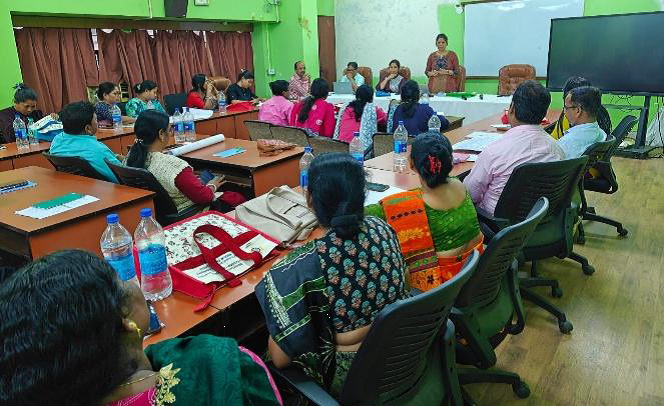
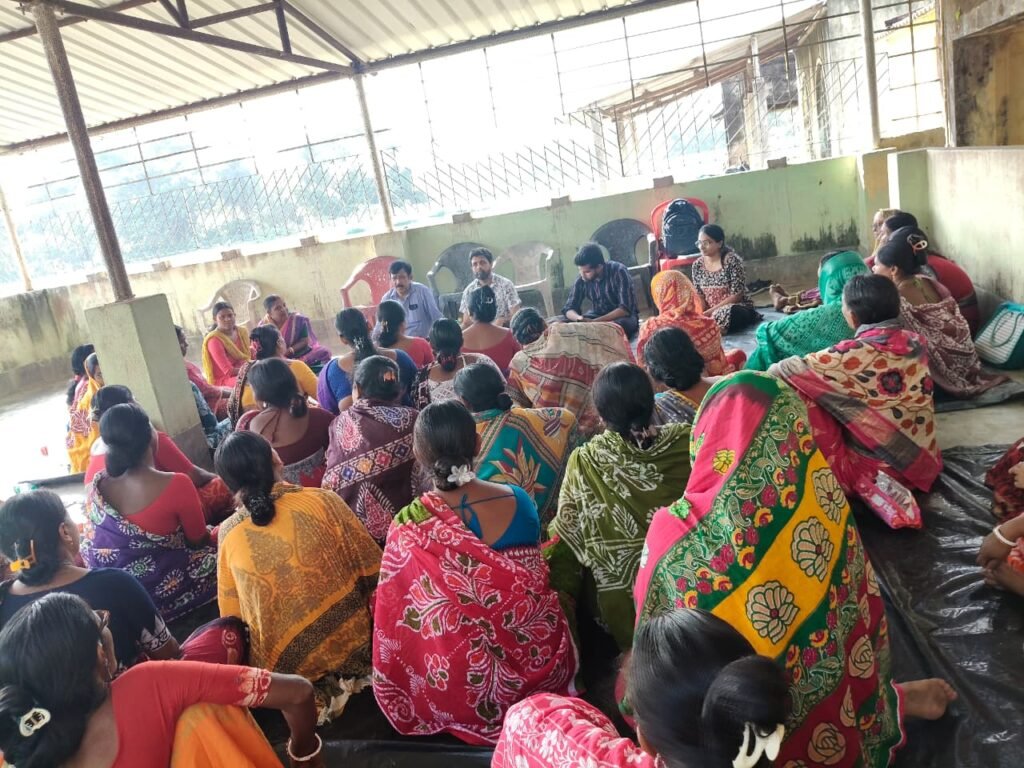
Gram Niyojan Kendra (GNK), in partnership with Landesa (USA), is transforming this reality by equipping women understand, claim and secure their property rights in Sundarban delta of West Bengal and Lohardaga district of Jharkhand. Through legal literacy, documentation support, leadership development, collective farming and climate-resilient livelihood practices, the programme builds a strong foundation for long-term social, economic and environmental security. GNK has been working closely with the Government of West Bengal 4 years, relevant departments including the Land and Land Reforms Department, and “Anandadhara”-West Bengal State Rural Livelihoods Mission (WBSRLM), an agency of the Panchayats and Rural Development Department (P&RD Dept) for promotion of Women Land Literacy (WLL) among the SHG members in the state.

SHG women who are participants in the GNK program are trained as facilitators to use a smartphone/tablet to help rural women and men access the online land registration system to obtain plot information, certified copy of records, and submit online applications to update records, for the facilitator SHG women will charge a reasonable service fee.

Program Objectives

  • Strengthen women’s ownership and inheritance rights over land and property
  • Build legal awareness and confidence to access government services
  • Promote collective farming and livelihood security
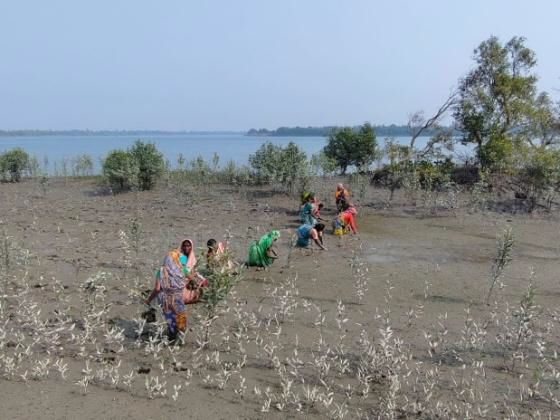
  • Support climate resilience through mangrove conservation

Key Milestones

  • Government systems prioritise Women’s Land Literacy (WLL) through growing collaboration with GNK
  • 295 SFC operating; 1,287 Service Providers trained; 16,108 mutation applications disposed; 12,329 cases disposed in the quarter
  • 8,46,516 Rural women are now better informed about land ownership, inheritance rights and legal processes, enabling them to confidently claim and protect their property rights.
  • Strengthened linkages between rural women and government systems, improving access to land records, documentation and entitlement services.
  • Women’s participation in Panchayat processes and community decision-making has increased, amplifying their voice and participation in governance.

Coverage: South 24 Parganas district,West Bengal
Voices of women
“In our ancestral land where my brothers also live, I have been given just a shed in an outhouse.
I dare not demand equal rights lest my parents and relatives take this also away from me.”

Women’s Empowerment Through Land Literacy – Jharkhand

Supported By Landesa USA

In tribal areas of Jharkhand, women face significant barriers in accessing, owning and inheriting land due to deep-rooted patriarchal norms and traditional governance systems. Despite their strong contribution to agriculture and household livelihoods, women often remain excluded from land ownership and related decision-making processes.

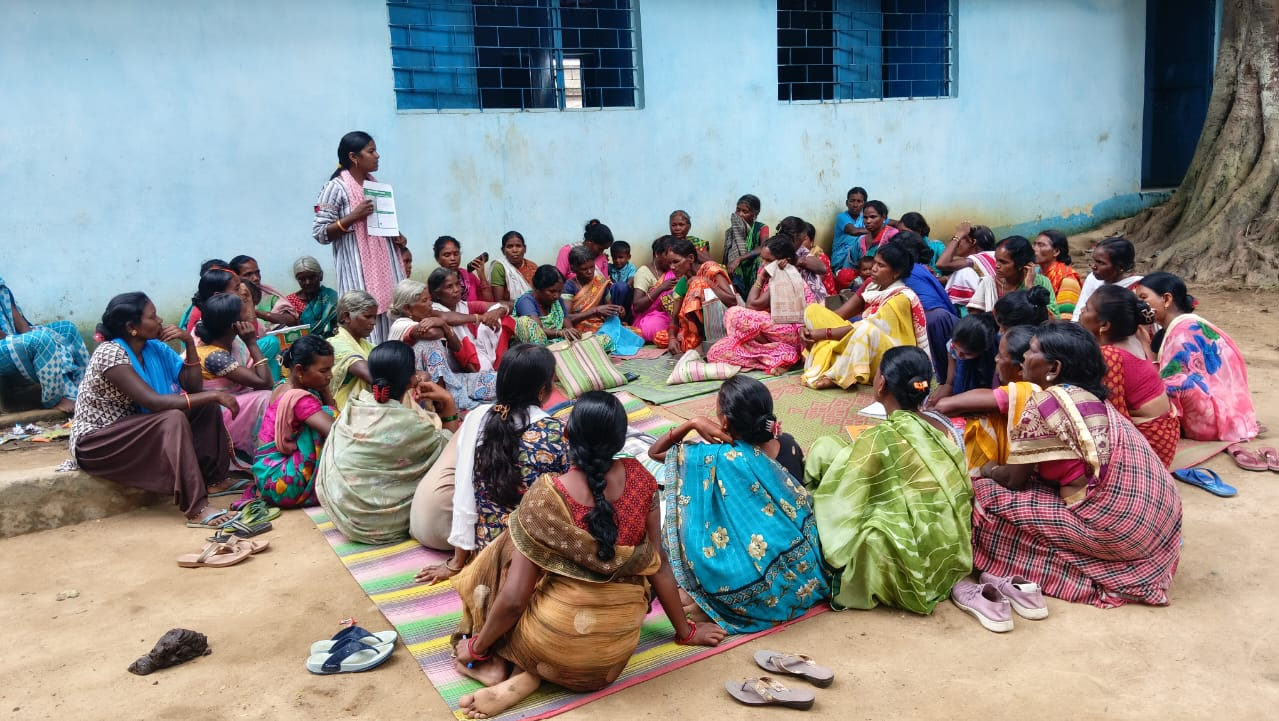
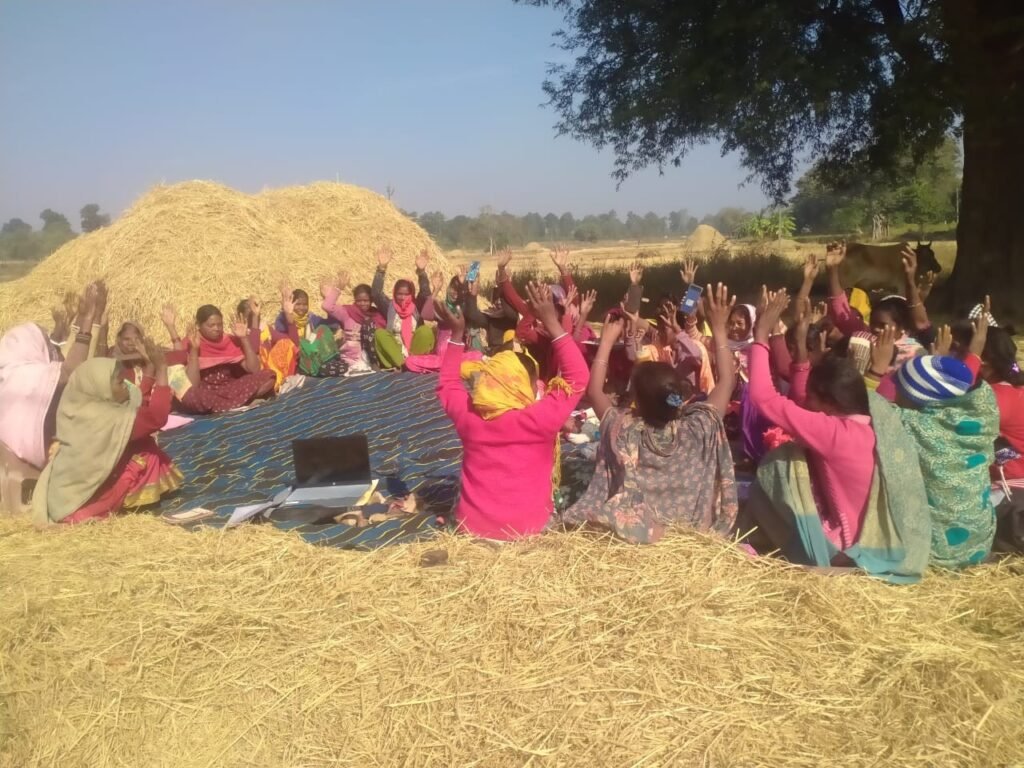
Gram Niyojan Kendra (GNK), in partnership with Landesa (USA), is working in selected panchayats of Lohardaga district to strengthen women’s understanding of land systems and enable them to claim their rights with confidence. Through structured land literacy modules, leadership development and engagement with community and government stakeholders, the programme aims to build a sustainable and scalable model of change that improves women’s land tenure security.

The intervention focuses on four pilot panchayats across two blocks of Lohardaga district, creating a strong support system of trained women leaders, sensitised community representatives and responsive government institutions.

Stronger Land Rights for Women in Jharkhand, builds on rural women’s understanding of land systems and ability to negotiate their land rights and create an enduring support system of women leaders, and also to increase the sensitivity of community leaders to women’s land tenure.

Program Objectives

  • To strengthen rural women’s understanding of land systems and enhance their ability to claim and negotiate their land rights, while building a sustained support network of women leaders.
  • To increase awareness and sensitivity among community and traditional leaders regarding women’s land tenure rights and encourage their active commitment to securing those rights.
  • To engage and sensitise district-level government stakeholders to improve responsiveness and institutional support for women’s land ownership and tenure security.
  • To build a strong and collaborative network of organisations and individuals across Jharkhand focused on improving women’s access to land, land records and property rights.

Key Milestones

  • Designed four structured land literacy modules, reaching thousands of rural women across selected panchayats to build understanding of land systems and rights.
  • Conducted Panchayat-level workshops engaging traditional leaders, community leaders and PRI members, strengthening dialogue on women’s land tenure and reducing land-related conflicts.
  • Developed Jharkhand-specific land literacy study materials in consultation with Circle Officers and legal authorities, ensuring relevance to local land systems.
  • Strengthened collaboration with District Legal Services Authority (DLSA), with legal stakeholders expressing commitment to integrate land literacy orientation for advocates and paralegal volunteers.

Testimonies from community
Tito Orao received judgment in her favor, able to reclaim her share of the inheritance land

A 45-year-old mother of four children, Tito Oraon, believes that without this knowledge, she would never have raised the issue with her son-in-law, would still be waiting for the court’s decision, and might have lost her land.

She had already petitioned the court in writing about the division of land and her relatives’ unauthorized use of her property. She discovered that no one may unlawfully occupy khatiyani land and that all co-sharers and legal heirs have equal rights over it after taking part in land literacy training conducted by the Gram Niyojan Kendra. She had previously been unable to properly follow up on her court case because of a lack of legal expertise.

After the training, she spoke with her son-in-law about the situation and, via him, got in touch with her legal representative to find out why the case was taking so long. She then gave the lawyer strict instructions to work hard on the matter. Regular judicial proceedings were consequently arranged, and the ultimate verdict came out in her favour.

Mangrove Conservation Programme, Sunderban Delta, West Bengal

Strengthening coastal communities to protect nature and secure livelihoods.

In the climate-vulnerable Sundarban Delta of West Bengal, rising sea levels, cyclones and salinity are increasingly having an adverse impact on the lives and livelihoods of fishing and farming communities. Gram Niyojan Kendra’s Mangrove & Climate-Livelihood Resilience programme works to equip women as agents of change so that they work with their families to protect mangrove ecosystems, strengthen climate awareness and promote nature-based livelihood practices that improve food security and disaster preparedness.

GNK aligned with the vision of the state government to mitigate adverse effects of climate change in this extremely sensitive region. By combining community learning, eco-friendly livelihood support and mangrove conservation, the programme promotes climate resilience by helping families adapt to climate risks while safeguarding the natural resources that protect their villages from floods and storms.

Program Objectives

  • Build climate awareness among women and vulnerable families
  • Promote mangrove conservation and nature-based solutions
  • Support eco-livelihoods and protective farming practices
  • Strengthen disaster preparedness amongst Sunderban Delta communities
  • Improve access to forest and livelihood entitlements

Milestones

  • 4103 Coastal women and 6015 SHG women have developed a deeper understanding of climate risks, mangrove protection and nature-based solutions, enabling them to actively participate in conservation and disaster preparedness efforts.
  • 105 SHG women received training – aqua culture and vegetable cultivation,
  • Support provided to 23 Gram Panchayats for inclusion of climate change and mangrove conservation related activities.
  • Healthy mangrove forest ecosystems support natural resource-based livelihood security and provide ecosystem services to rural communities, including clean air and water benefits, storm surge protection, wave attenuation, and habitat for biodiversity.
  • Governments and communities support and sustain the continued health of mangrove forest ecosystems.
  • Community-led eco-livelihood and sustainable farming practices have been strengthened, helping families protect incomes while safeguarding mangrove ecosystems that shield villages from floods and cyclones.

Testimonies from community women”

“Our limited interaction with the outside world deprived us of latest developments in the world. Through the GNK trainings and sensitisation sessions we have learnt a lot about climate change and are now implementing some of those learnings in our farming practices.”

Coverage
Sundarban Delta (South 24 Parganas), West Bengal

Our Maps

© Copyright by Gram Niyojan Kendra

Website Development By Astrex Solution.